How to Clean Out Your Fridge + Pantry (Beyond Expiration Dates)
On this page
We've all been there. A jar of specialty sauce tucked behind everything else in the refrigerator. A can of something you bought for a recipe you never made. Three half-used bottles of the same condiment. Or food hiding in the back of the pantry that you forgot you even had.
When we work with clients at Impactful Organizing, checking expiration dates is often part of organizing a kitchen. But we find that the date on the package is only one part of the decision.
If you toss food once the date passes, that's a simple rule that works.
If you'd rather know what's still safe before you let it go, this guide can help.
Just because something is still good doesn't mean it's something you'll actually eat. Maybe your tastes have changed, your plans never happened, or you bought more than you needed. Whatever the reason, a kitchen and pantry cleanout is a chance to make room for the foods you enjoy and actually use.
Start With Two Questions
As you work through your food, ask yourself two questions.
1. Is it still safe to eat?
Check the date, storage instructions, and whether the food has been opened. Consider how long it's been stored and whether it has been kept at the proper temperature. Look for signs of spoilage, damaged packaging, or other reasons to question its safety.
Keep in mind that many dates printed on food packages are about freshness and quality, not food safety. We'll share more about understanding those dates below.
2. Will I actually use it?
This is where things get interesting. A perfectly good item might not be worth keeping if you have no intention of eating it.
Ask yourself:
If I saw this at the grocery store today, would I buy it again?
Am I keeping this because I want it, or because I feel guilty throwing it away?
Have I been saving this for a special recipe or occasion that never seems to happen?
If I keep it, when will I use it?
Be honest with yourself. You don't need to keep an ingredient just because you once had a plan for it. Kitchen storage is valuable real estate, and every jar you won't use is taking room from the foods you reach for every week.
Don't Forget These Commonly Overlooked Spots
When cleaning out a kitchen, it's easy to focus on the obvious shelves and miss the areas where food tends to get forgotten.
Deep pantry shelves and upper cabinets
Pull everything forward so you can see what's hiding in the back. Check canned goods, boxed meals, baking supplies, specialty ingredients, and duplicate purchases.
The refrigerator door
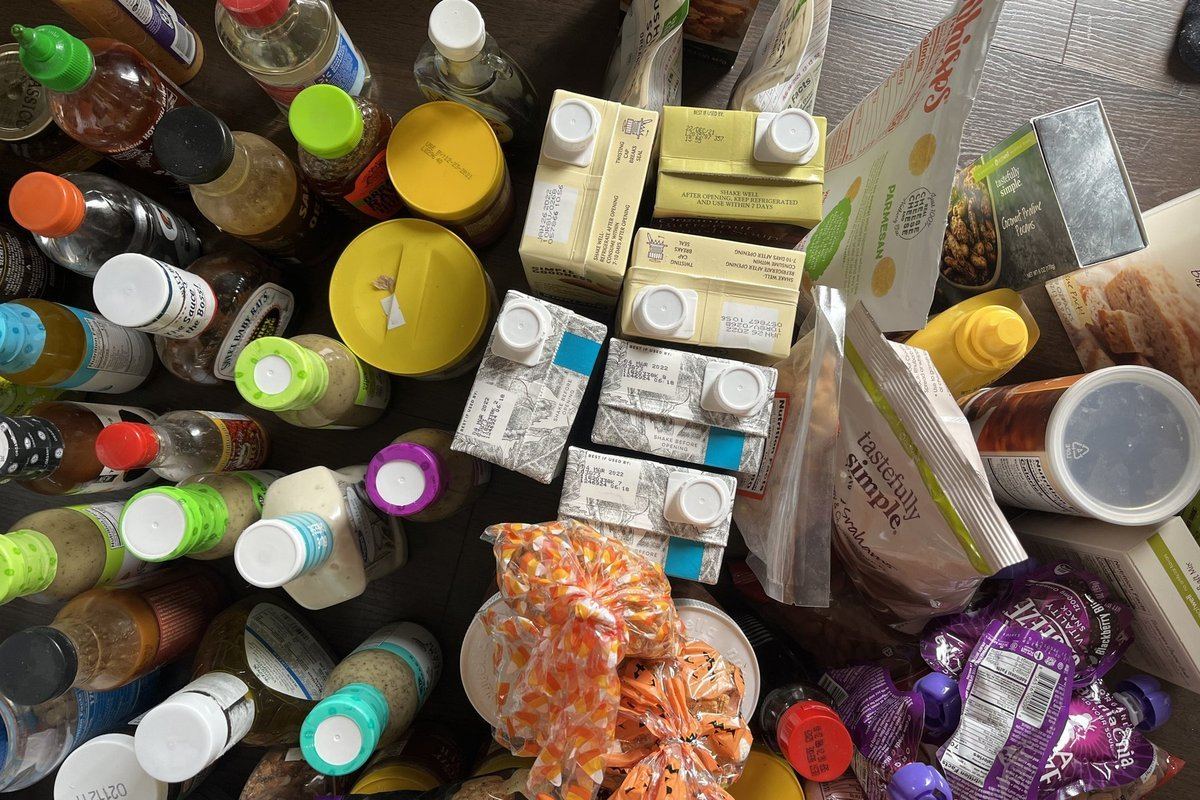
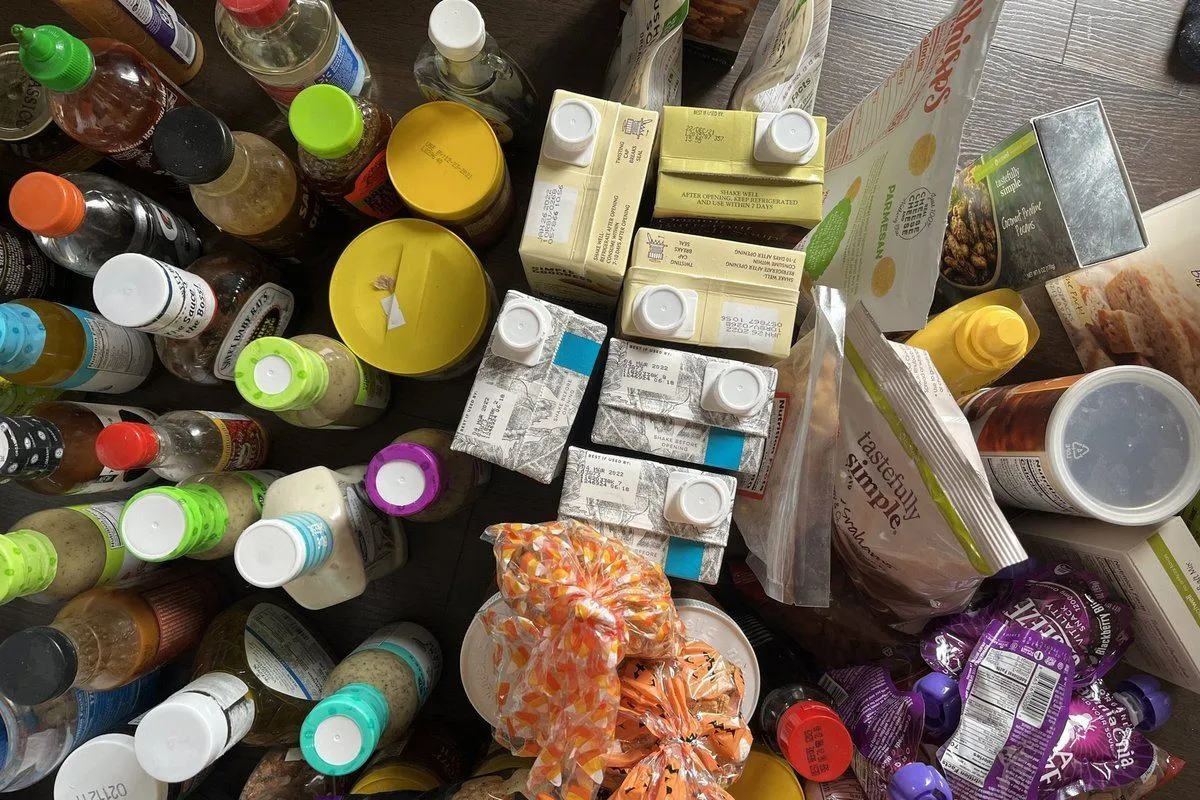
This is where sauces, dressings, marinades, and condiments tend to pile up. Pull them out and group similar items together. You might discover that you have three versions of something you only use once in a while.
The back of the refrigerator
Move items around and check what's been pushed out of sight. Pay particular attention to opened containers, leftovers, and produce drawers.
The freezer
Don't forget frozen vegetables, meats, prepared meals, and those mystery containers you put away months ago. Frozen food stored continuously at 0°F stays safe indefinitely, although its quality can decline over time.
Not sure how long something lasts once it's opened? Here's a quick guide.
Unsealed food? Here's how long it keeps.
Opened and cooked food, in the fridge, from the day you open or cook it. First, ask yourself: When did I open this? If you can't remember, it's better to toss. Does it look, smell or feel off? Will I finish it before it goes bad?
Opened canned veggies, beans, soup: 3–4 days
Opened canned tomatoes, fruit: 5–7 days
Cooked pasta, rice: 3–4 days
Mustard: 12 months
Ketchup: 6 months
Salad dressing: 3 months
Mayo: 2 months
Salsa: 1 month
Shredded cheese, opened: 1 month
Hard cheese, opened: 3–4 weeks
Eggs, in shell: 3–5 weeks, counting from the day you buy them
Milk, opened: 1 week
Lunch meat, opened: 3–5 days
Most cooked food, soups, pizza: 3–4 days
Frozen leftovers: safe indefinitely, best quality within a few months
Tip: Write the date on opened jars and leftovers. Sources: FoodSafety.gov, USDA FSIS and the FoodKeeper guide (FMI/Cornell).
Understand Food Dates Before You Toss Everything
The dates printed on food packages can be confusing. You might see Sell By, Best If Used By, Use By, or other wording. Here's a quick explanation:
Sell By: Tells the store how long to display the product. Not a safety date.
Best If Used By: When the food will have its best flavor or quality. Not a safety date.
Use By: The last recommended date for peak quality. Not a safety date, except on infant formula.
Expiration Date: Not a federally defined term. Its meaning varies by manufacturer.
Except for infant formula, dates on food aren't required by federal law and aren't safety dates. Never use infant formula after its Use By date. Learn more about food dates from USDA.
Proper storage is just as important as the date. Keep your refrigerator at 40°F or below and your freezer at 0°F or below. Follow package instructions, especially for foods that have been opened. If you aren't sure how long something has been stored or whether it was handled safely, don't take chances.
Wondering whether an unopened item is still good past its date? Use the chart below. For anything not listed, look it up in USDA FoodKeeper.
Past the Date: Safe to Keep, Okay to Let Go
Unopened food, how long it's good past the printed date. First, ask yourself: Will I use this in the next 2 months? Would I buy this again today? Sealed? No dents, bulges, leaks or rust?
Canned veggies, soups, broth (not tomato-based): 3 years
Canned meat, chicken, tuna: 2 years
Canned tomatoes, fruit, juice: 18 months
White rice, dry pasta: 2 years
Cereal, white flour: 1 year
Boxed mac and cheese: 10 months
Crackers: 8 months
Cookies: 4 months
Chips: 2 months
Mustard: 2 years
Peanut butter, jam, ketchup: 18 months
Salad dressing: 1 year
Cooking oil: 6 months
Mayo: 4 months
Juice boxes: 5 months
Soda, regular cans: 9 months
Soda, bottles and diet cans: 3 months
Never past the date: infant formula, baby food, and nutrition shakes (Boost/Ensure). When in doubt, throw it out. Food dates are about quality, not safety, except on infant formula (USDA). Times based on food bank shelf-life guides from Food Bank of Alaska and Greater Pittsburgh Community Food Bank.
Four Habits That Help You Waste Less Food
When you can see what you have, it's easier to use it before it goes bad. That saves money, cuts down on waste, and makes it simpler to pull a meal together on a tired day. It matters even more when energy, mobility, or a tight budget makes every trip to the store count.
1. Keep like items together.
Keep sauces with sauces, canned vegetables with canned vegetables, and baking supplies together. When similar items are grouped, it's easier to see what you have and avoid buying duplicates.
2. Bring older items to the front.
When putting away groceries, move older items forward and place newer purchases behind them. This simple habit makes it more likely that you'll use what you already have.
3. Create an Eat First area.
Set aside a small shelf or refrigerator bin for foods that need to be used soon. This could include produce, opened ingredients, leftovers, or anything close to the times in our chart.
4. Shop from your shelves first.
Before heading to the store, look through your fridge and pantry so you don't buy what you already have. And while bulk deals are tempting, they're not a bargain if the food goes to waste. Buy amounts that fit your household and the way you cook.
It's Okay to Change Your Mind
One of the hardest parts of a kitchen cleanout can be letting go of food that you spent money on.
Maybe you bought something for a recipe you never made. Maybe you tried a new product and didn't like it as much as you expected. Or maybe your eating habits have changed, and something that used to be a staple just isn't anymore.
It's okay.
You don't have to keep something simply because you bought it. The money has already been spent, and keeping the item doesn't get it back.
If food is unopened and safe, consider donating it to a local food pantry. Most pantries take items that are still safe but past the expiration date. See their website for specific details.
Care and Share Food Bank: 2605 Preamble Point, 80915 | 719-528-1247. Food donation drop-off is Monday to Friday, 8 a.m. to 3 p.m.
Crossfire Ministries: 3975 N. Academy Blvd, 80917 | 719-447-1806
Salvation Army: 208 Cunningham Dr, 80911 | 719-382-1182. This location provides no-cost clothing and food pantry items.
God's Pantry Ministry: 102 N. Main Street, Fountain, 80817 | 719-382-0643. A non-denominational clothing and food bank and thrift store.
Otherwise, give yourself permission to let it go.
A well-organized kitchen isn't one where every shelf is full. It's one where you can find what you need, see what you have, and make use of the foods you enjoy.
Ready for a Fresh Start?
You don't have to tackle every cabinet and drawer in one afternoon. Start with one pantry shelf or one section of your refrigerator. Pull things out, make a few decisions, and put back only what you want to keep.
At Impactful Organizing, we help people create homes that better support their health, independence, and quality of life. Sometimes that starts with something as simple as making room in the pantry.